
 By
By 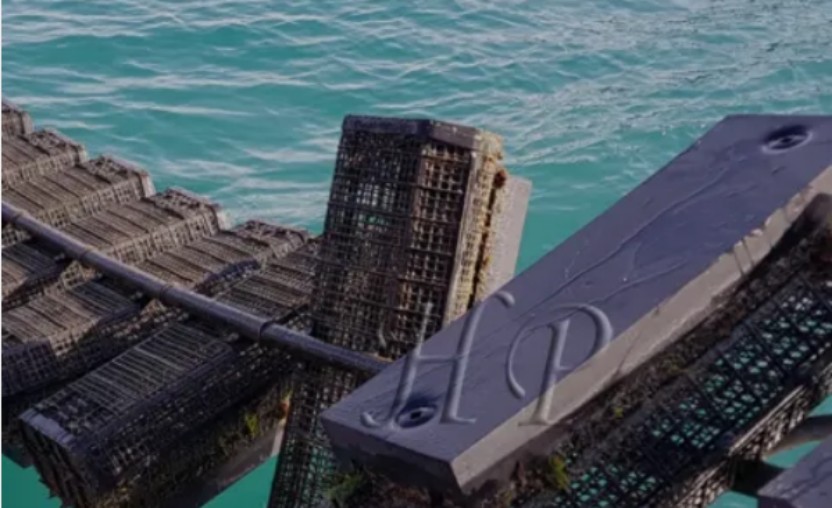
Ever wonder what it would be like if your oyster farming gear actually worked with you instead of against you? Imagine gear that doesn’t just hold your oysters but actively hustles to get them fatter, cleaner, and to market faster, all while cutting your backbreaking labor in half. Sounds like a pipe dream, right? For a long time, it was. Traditional oyster farming, for all its rustic charm, is a brutal game of patience and muscle. You’re constantly fighting fouling, battling for consistent shape, and spending more time wrestling with your equipment than actually growing a premium product. But then, a seemingly simple piece of kit came along and flipped the entire script—quite literally. I’m talking, of course, about the flip farm oyster basket.
This isn’t just another cage or bag; it’s a full-system rethink that tackles the core frustrations of oyster growers head-on. The genius isn’t in some complex, high-tech gadgetry. It’s in a profoundly smart design principle: the ability to easily invert the entire growing environment. That single feature, the ‘flip,’ sets off a chain reaction of benefits that ripple through every stage of production. We’re talking about a tangible boost in yield—not by magic, but by mechanics—and a dramatic slashing of the maintenance monster that has haunted farmers forever. Let’s dive into how this unassuming basket is quietly revolutionizing tidelines.
The Yield Game-Changer: Fattening Oysters Faster and Smarter
So, how does a basket actually make oysters grow better? It all comes down to environment. An oyster is a product of its surroundings. In a static bag or fixed tray, oysters settle. They find a comfy spot, and that’s that. Water flow is inconsistent; some oysters get the buffet line of plankton-rich current, while others in the middle get the leftovers. Fouling builds up, further restricting flow and competition for food. The result? A batch with uneven sizing, slower growth, and a longer time to market.
Enter the flip farm oyster basket. Its design promotes what growers call “tumbling.” No, you’re not putting your oysters in a dryer. But by regularly flipping the entire unit—a task one person can do in seconds—you gently redistribute the oysters inside. This occasional movement is a game-changer. It prevents the oysters from cementing themselves to one spot or each other. It knocks off the early stages of fouling, like algae and silt, before they become a serious problem. Most importantly, it naturally abrades the fragile shell edges, encouraging the oyster to focus its energy on thickening its shell and bulking up its meaty interior instead of growing long, brittle, and misshapen.
Think of it like this: a tumbled oyster is a streamlined oyster. It’s rounder, deeper-cupped, and more uniform. That deep cup is the holy grail—it means more space for that delicious, plump meat. The consistent water flow to every oyster, unhindered by debris or overcrowding, means they’re all feeding efficiently. You’re essentially running a precision aquaculture system instead of a free-for-all. Growers using the flip farm oyster basket consistently report not just more uniform batches, but also a significant reduction in time to reach market size. They’re getting a premium product, known for its perfect shape and meat content, in less time. That’s a direct, powerful impact on yield and profitability. You’re not just growing more oysters; you’re growing better oysters, faster.
And let’s talk space. These baskets are stackable and modular. This vertical efficiency means you can grow a higher density of oysters without sacrificing the individual care each one needs to thrive. It maximizes your farm’s footprint, allowing you to increase overall yield without needing to lease more expensive water bottom. It’s a smarter, more intensive use of the space you already have, all driven by the adaptable nature of the flip farm oyster basket.
Slaying the Maintenance Dragon: From Chore to Check-In
If you’ve ever spent a full, sunburnt day pressure-blasting bags or painstakingly picking keelworms off cages, you’ll understand the true value of this next point. Maintenance is the anchor that drags down profitability and joy in oyster farming. It’s relentless, physically demanding, and often feels like a zero-sum game—you clean to return to baseline, not to actually improve.
The flip farm oyster basket approaches this problem with elegant simplicity. The primary maintenance is the flip. That regular, easy inversion is a proactive strike against fouling. By not letting organisms establish a stronghold, you avoid the backbreaking, tool-breaking labor of removing cemented-on barnacles, mussels, and worms. A quick dunk or a spray often does the trick after a flip. The design itself, with its open, durable mesh, minimizes surfaces where crud can build up compared to the complex folds and seams of traditional bags.
But the benefits go deeper. Remember those perfectly tumbled, uniform oysters? They have a side benefit: they’re incredibly easy to grade and handle. When it comes time to sort sizes or harvest, you’re not fighting a tangled, jagged clump of shells fused together by marine concrete. You’re handling a basket of individual, clean, similarly-sized oysters. What used to be a day-long, multi-person ordeal can shrink to a matter of hours. This efficiency transforms your workflow. Instead of dreading maintenance days, they become quick, integrated parts of the regular farm cycle. It frees up your most valuable resources—time and energy—to focus on scaling, marketing, or, heaven forbid, taking a day off.
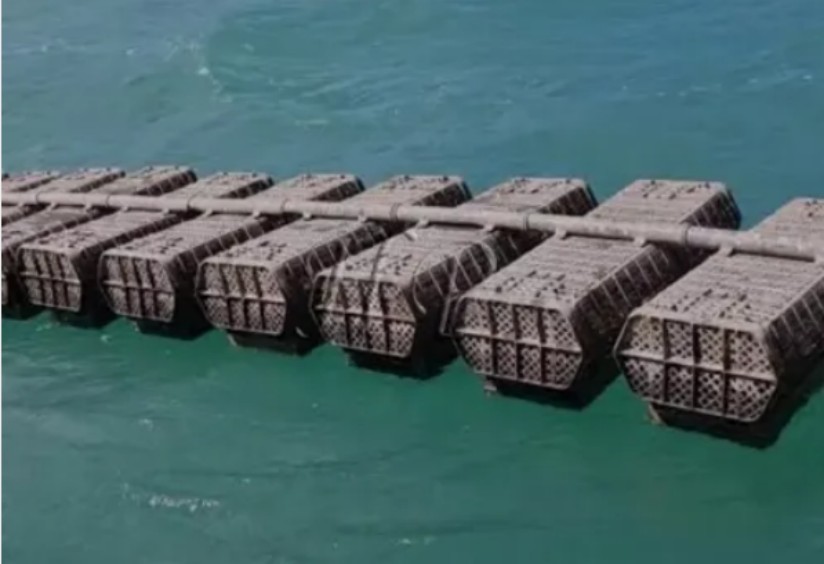
Durability plays a huge role here, too. These baskets are built to withstand the harsh marine environment and the physical stress of regular flipping. They’re made from robust, UV-stabilized materials that won’t degrade quickly under the sun. This means you’re not constantly repairing or replacing gear. The initial investment in a flip farm oyster basket system pays off not just in yield, but in drastically reduced operational costs and replacement expenses over the long run. You’re buying gear for seasons, not just a single cycle.
The On-the-Ground Reality: Adaptability and Ease
All this theory is great, but how does it actually play out on a working farm? The beauty of the flip farm oyster basket is its adaptability. Whether you’re a small-scale artisan grower with a few hundred oysters or a large commercial operation, the principle scales. The modular system allows you to start small and expand easily. The flip mechanism is so straightforward it doesn’t require heavy machinery or specialized training. One person, on a dock or a boat, can manage hundreds of units in a single tide cycle.
This ease of use extends to every interaction. Deploying the baskets is simple. Monitoring your stock is a breeze—a quick peek through the mesh gives you a clear view of growth and health without having to dismantle anything. Harvesting is, as mentioned, dramatically simplified. It reduces the barrier to entry for new farmers and reduces the physical toll on seasoned veterans. It makes the farm more manageable, less daunting, and frankly, more fun. You spend more time observing growth and less time fighting your infrastructure.
Furthermore, the system is kind to the oysters. The reduced handling stress, the consistent environment, and the prevention of heavy fouling all contribute to healthier, hardier stock. Healthier oysters mean better survival rates, especially through seasonal stressors, which again, translates directly to a more reliable and robust yield. It creates a positive feedback loop: happy oysters, happy farmer.
Flipping the Mindset: More Than Just a Basket
In the end, adopting the flip farm oyster basket is about more than just switching out your gear. It’s about adopting a new mindset toward oyster farming. It moves the practice away from reactive, labor-intensive struggle and toward proactive, intelligent cultivation. It acknowledges that the quality of the tool defines the quality of the work and the product.
This basket isn’t a silver bullet for every challenge on the water, but it addresses the two most critical ones: growth efficiency and operational sustainability. By fundamentally improving yield through superior biology and physics, and by eviscerating the time-sink of maintenance, it changes the economics and the lifestyle of the job. It turns potential profit-killers into manageable, streamlined processes.
For anyone serious about oyster farming—whether you’re looking at your first spat or managing a multi-acre lease—the question isn’t really if you should consider this system, but when. The flip farm oyster basket represents that rare leap in agricultural tooling where a simple, clever idea delivers compounded, tangible rewards season after season. It proves that sometimes, the best way to move forward is to just flip things on their head and see what happens. In this case, what happens is better oysters, a healthier back, and a brighter, more productive future on the water.








Comments