
 By
By 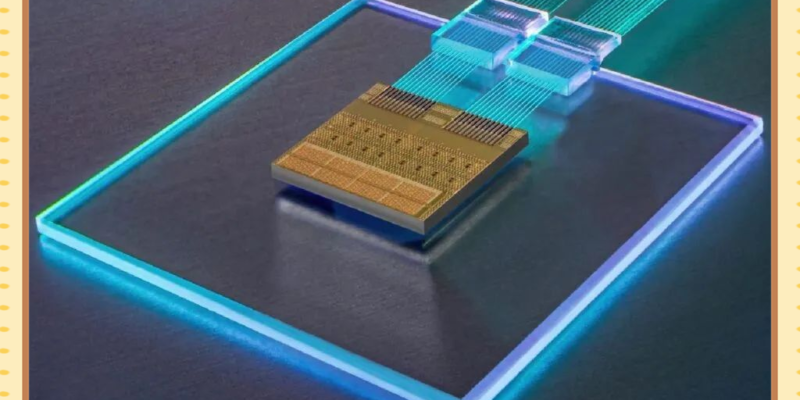
Introduction
Copackaged optics compresses a remarkable amount of engineering complexity into a very small space. The architectural logic is compelling: move the optical engines closer to the switch silicon, shorten the electrical path, reduce power consumption, and unlock bandwidth densities that pluggable architectures cannot approach. But proximity introduces its own difficulties. The thermal demands of multiple high-power components sharing a common package, the yield requirements of a multi-element assembly, and the test infrastructure needed to validate an integrated system are not trivial problems. Understanding the design challenges that define copackaged optics development is essential for any organisation working to bring the technology from architectural promise to operational reality.
Thermal Management: The Central Design Constraint
No design challenge in copackaged optics is more pervasive or more consequential than thermal management. A high-bandwidth switch application-specific integrated circuit operating at full capacity generates substantial heat. When optical engines are integrated into the same package, the combined thermal load must be extracted through a packaging architecture that simultaneously maintains the tight spatial tolerances required for optical alignment and the mechanical stability required for long-term reliability.
Thermal management approaches available to Copackaged optics designers include:
- Integrated heat spreaders positioned directly above the switch die and optical engine array to distribute heat across a larger surface area
- Thermal interface materials selected for both conductivity and mechanical compatibility with coefficient of thermal expansion differences between dissimilar package materials
- Microfluidic cooling channels embedded within the package substrate, enabling liquid cooling at the point of heat generation
- Optimised floor planning of optical engine placement relative to the switch die, distributing thermal load across the package
The challenge is not simply extracting heat but doing so without introducing mechanical stress that degrades optical alignment over thermal cycles.
Optical Alignment and Coupling Precision
The optical interfaces within a copackaged optics assembly must be established and maintained with a precision that has no direct equivalent in conventional electronic packaging. Coupling efficiency between laser sources, waveguides, modulators, and photodetectors is highly sensitive to lateral and angular misalignment, with tolerances measured in fractions of a micrometre.
Active alignment, in which optical output is monitored in real time while components are positioned and fixed, is the most reliable approach but adds process time and cost. Passive alignment relies on precision mechanical features to locate components without active feedback, offering higher throughput but demanding stringent dimensional control across all mating surfaces.
Singapore’s copackaged optics manufacturing sector has developed assembly capability across both alignment approaches, with process development directed at extending the applicability of passive alignment methods to reduce cycle time without compromising coupling efficiency.
Package Substrate Engineering
The package substrate in a copackaged optics assembly carries electrical signals, provides mechanical support, manages heat flow, and in some implementations incorporates optical waveguides routing signals between components. Key engineering considerations include:
Electrical interconnect density
High-speed signals require controlled impedance transmission line geometries with minimal crosstalk at lane rates above 100 gigabits per second
Optical waveguide integration
Propagation loss, bend radius constraints, and interface coupling efficiency must all be managed within the same fabrication process
Coefficient of thermal expansion matching
Substrate materials must minimise differential expansion between the switch die, optical engine components, and the substrate across the full operating temperature range
Mechanical stiffness
Sufficient rigidity is required to maintain optical alignment tolerances under the mechanical loads of assembly, test, and field operation
Yield Management Across a Multi-Component Assembly
A copackaged optics assembly integrates components from multiple technology domains into a single package whose overall yield is the product of individual component and process yields at every integration step. The industry has responded through several strategies: known-good-die testing of switch silicon and optical engine components before integration, modular optical engine architectures that allow failed elements to be replaced before final package closure, and statistical process control across each assembly step to identify process drift before it produces systematic yield problems.
Testing and Qualification Infrastructure
Testing a copackaged optics assembly presents challenges with no direct precedent in pluggable transceiver qualification. Electrical, optical, and thermal performance must be characterised simultaneously using test infrastructure capable of applying realistic operating conditions to a device defined by its package geometry. Qualification standards are still maturing, and manufacturers at the leading edge of copackaged optics deployment are in many cases developing proprietary test methodologies in parallel with their product programmes.
Conclusion
The design challenges that define Copackaged optics development are significant, but they are the kind of problems that yield to sustained engineering investment and accumulated process experience. Thermal management, optical alignment precision, substrate engineering, yield optimisation, and test infrastructure development are each tractable in isolation. The complexity of copackaged optics lies in solving them simultaneously, within a single integrated package, at the yield and reliability levels that hyperscale data centre deployment demands. The organisations making measurable progress on those challenges in 2026 are treating the engineering of copackaged optics with the rigour the technology demands.












Comments