
 By
By 
Are you feeling like you’re sinking under piles of PDF documents, and your Downloads folder is exploding? There are millions of PDF files out there that are each second-by-second reminders of the hours of your life that you will never get back. You are not alone in feeling overwhelmed in the constant onslaught of professional and academic publishing. The act of reading a paper in its entirety from abstract to reference has become a luxury or perhaps a catastrophic strategy for reading authors. You need a smarter filtering system or a quicker/easier triage system for reading papers than trying to read the whole paper (especially as a sharp website editor). This is where the art of screen paper come into play. They can be read as a passive skim or as an active, brutal, liberating interogation. The screen paper is the difference between being lost in a library and having a detailed map to one brightly marked destination. Let’s put aside the guilt of not reading all the words and start enjoying the benefits of using the preliminary screen paper as your most effective research survival tool!
The Art of the Strategic Skim: Your First Filter
Consider that the first step in processing a screen paper should not be viewed as reading, but more like ornithological investigation (bird investigation). As you approach the task of looking through the screened PF papers for salient clues to your particular problem statement “Is this document worth my valuable time?”; begin with the most evident pieces of evidence – the title and abstract of a PF paper. Examine them in depth, as if they are detectives attempting to uncover the truth. Does the title actually identify the central problem or does it merely declare it to be an elevated topic with no relevance? While the abstract must serve as the complete containment of what is being presented, within a short period of time (30 seconds), one should also be able to find out what the major hypothesis, methodology and key findings of the article are; if you can’t, this will be your first indicator that either the person who wrote the abstract is not capable of writing well (the absence of coherence in an abstract is a strong indicator of the absence of coherence in the writing of the overall document), or this could be a long and tedious article to read.
Start with reading only the conclusion or discussion of an article, which sounds uncomfortable but is necessary to your success! The only way to really see if this paper will help you understand their “results” and if they are “good”. By glancing through the figures/tables then you can answer questions about how they present their data and summarize the “main trends” of their data as visible with ease. If you visually see their key results you will understand what is the heartbeat of this article. The entire skim-title, abstract, conclusion, visuals-should take no more than 3 to 5 minutes, providing you with one efficient means to quickly identify papers you want to include on your shortlist and take notes for further review.
Uncovering Hidden Flaws: The Methodology Minefield
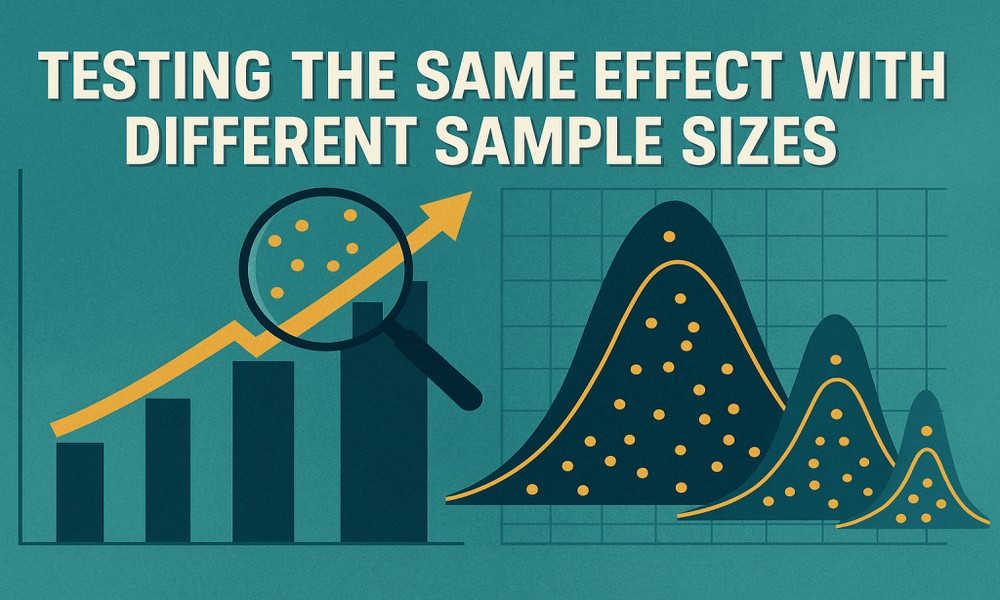
Screening scholarly papers can be an important step in ensuring that your work does not jump to conclusions based on inadequate research. After finding that a paper may have been productive enough to warrant further investigation you will want to take a critical look at the methodology. You don’t need to replicate the statistical analysis they did, but you will want to ask questions about their research method. For instance, is the sample size large enough or does it consist of a few people? If you were to download a report from a study on user engagement trends conducted on a website, you would notice that the study was based on the response of ten people would yield vastly different results than if the data came from ten thousand people. You will also want to check to see if there are any important keywords within the methodology section of the study indicating if they used valid statistical models or tests, or if they did so incorrectly. In some instances a simple search for a keyword in the methodology may lead to a serious flaw in the way that the researcher performed their work.
In addition, examine the financing and the context. Who financially supported the research? Are there any disclosure statements? A study on sugar usage, financed by a soda company, should be evaluated differently from one that was supported by a public health organization. Check to see when the work was published and how many times it has been cited. Is this a foundational piece published in 2010 or a new study published in 2023? Have there been numerous other citations of this work or does it appear to stand alone? The purpose of this component of the screening will keep you from putting many hours into an article only to learn that its core methodologies, perspectives, or background information are not relevant, incorrect, or not well defined. This component helps you find problems with the integrity of the structure before you make the decision to locate your family in the home.
Aligning with Purpose: The Relevance Reality Check
The goal of your writing can dictate how deep into a topic or subject you should explore. If your purpose is to create a generic overview for an audience, then you will not have to go very deep into the subject. However, if your intent is to create an opinion piece that counters someone else’s, then you may find the need to explore even further to find supporting evidence. Thus, you need to establish your intent before doing anything else.
The goal of this phase of screening is to look at the introduction of the article as a guiding tool; not necessarily for the purpose of gathering background (there are better and faster ways of obtaining this type of information elsewhere) but rather the way that the research question is framed within the article. Does your angle match the way that they have framed the research question? You should also take advantage of the find function (Ctrl + F) to be able to quickly locate your specific keywords or key phrases. How many times do your keywords or phrases appear in context? The number of times that they appear is an indicator of whether the paper is primarily focused on your area of interest or if it simply references it in passing. It is also extremely valuable to look at the reference list of the paper as well. Sometimes, the greatest value that you will gain in reading a paper will be through discovering citations to older or more foundational or better suited references that are not readily available to you. Therefore, when screening papers, it is not only about eliminating a paper as a viable resource, but to also uncovering better and more focused resources through the use of the paper that is being screened.
From Overwhelm to Ownership: Reclaiming Your Time
Establishing a consistent habit of taking notes on screen at work is an exercise in protecting your intellect and professionalism. It changes the experience of collecting research from a passive and overwhelming task into one where you actively curate. Instead of being passively dispersed by whatever the publisher decides, you are acting as an editor, evaluator and scout; only selecting the best papers, ones you would like to take your focused time on. This relieves you from the sunk-cost fallacy of continuing to read through an irrelevant paper simply because you began it. This creates more room in your brain, helps you declutter your digital life and enhances critical thinking ability.
The staggering amount of time saved is unimaginable. By using screening methods to avoid reading two unnecessary and irrelevant 15 page papers each week, you can gain an entire workday back every month. You will now have time to think more deeply, write more clearly, and reduce the likelihood of burning out. You will be able, as a web editor, to produce fresher articles more quickly and to cover a larger amount of material with less stress. Next time you get that new alert for a paper in your inbox, resist opening it and downloading it. Take a deep breath, click the link and start screening. Your time and your attention is your most precious asset!








Comments